Show delivered scope before claiming business outcomes
A project can be concrete and valuable before ROI is verified. The key is to separate what was built, what was tested, and what changed in the business.
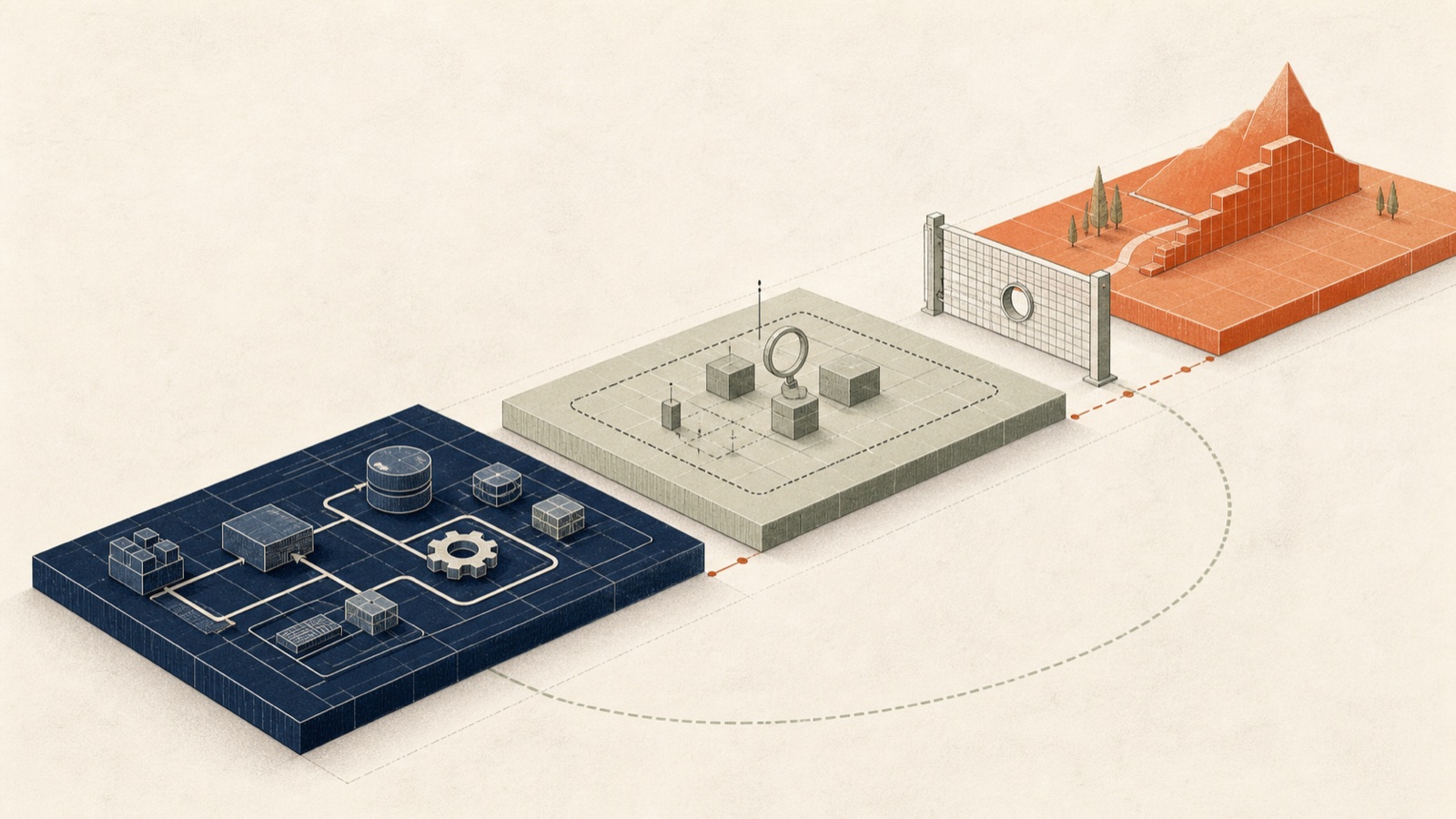
AI case studies often collapse three different statements into one: a system was built, a test produced a promising signal, and the customer's business improved. Those statements require different evidence. Treating them as equivalent is how a credible pilot turns into an inflated claim.
Delivered scope is already useful evidence
A reconciled data history, a governed workflow, a review queue or a working integration can be inspected. State the boundary precisely: which sources, how many controls, what period, which human decision remains. These facts show execution without pretending that ROI has already been measured.
Technical validation needs its own gate
A bounded pilot can show that a workflow runs, that totals reconcile, or that reviewers can use an interface. It cannot automatically prove production reliability or financial return. Define the test, baseline, owner and failure condition before promoting a technical result into a business claim.
Honest evidence is not weaker marketing. It gives a buyer a clearer answer to the question that matters: what can I inspect today, and what still has to be proven in my environment?
Three evidence layers answer different questions
Delivered scope answers what exists: the workflow, integration, review screen, controls, languages, data period or report views that were actually completed. Technical validation answers whether that scope performed under a defined test. Business outcome answers whether an operating or financial measure changed against an agreed baseline. A serious case study labels each layer instead of moving facts upward because the project sounds more impressive that way.
A number still needs a definition
Numbers feel objective, but a number without scope can mislead. Twenty-nine months of reconciled detail is a delivered-scope fact; it says how much history entered the workflow. A 30 percent cost reduction is an outcome claim; it needs the cost definition, baseline period, comparison method, exclusions and permission to publish. The second is not automatically stronger if nobody can reconstruct how it was measured.
Build a claim register while delivering
For every publishable fact, keep an identifier, evidence kind, source owner, reviewed date, scope and permission status. The register does not need to appear on the public page. It sits behind the content and decides what may render. When evidence improves, the claim can move from delivered scope to technical validation or verified outcome without rewriting the history of the project.
Buyers benefit from visible limits
A buyer does not need every case to promise dramatic ROI. They need to know whether the team can understand messy operations, create a working system, keep decisions reviewable and measure the next step honestly. Precise limits reveal judgment. They also make discovery more productive because both sides can ask which evidence from the previous case transfers, and which must be rebuilt in the new environment.
The practical sequence is simple: publish what was delivered, explain how it was tested, state what remains unverified, and define the next measurement gate. That produces a case study that helps a customer decide, not merely a story designed to impress them.