The forward-deployed model: putting engineers on the factory floor
The fastest way to deploy useful AI in a factory is not a better model. It is an engineer standing next to the machine, watching how the work actually happens.
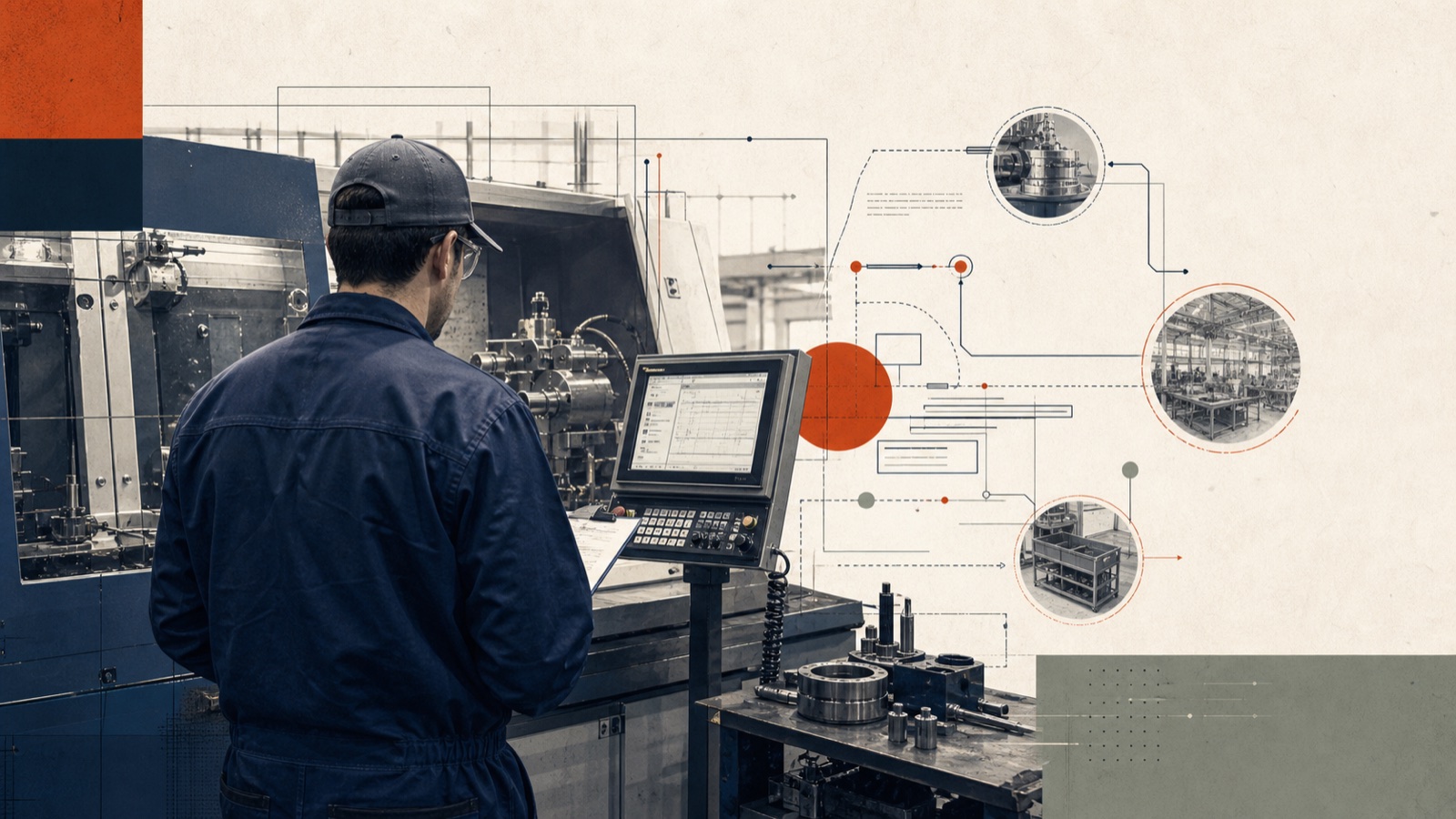
Remote AI projects optimise the wrong thing. They tune accuracy on a dataset that has already lost the context that matters: the lighting on the line, the way an operator rotates a part, the shift where the numbers always look strange.
Sit where the work happens
A forward-deployed engineer spends the first week not coding but watching. Which exceptions do operators quietly fix by hand. Which report gets rebuilt every month because no one trusts the export. That is where the value is, and none of it shows up in a requirements document.
Proximity also changes trust. When the people on the floor see the engineer fix a real annoyance in days, they start surfacing the problems worth solving. AI lands not as a threat but as something that takes the tedious part off their hands.
The model still matters. But the order is the point: understand the work first, deploy next to it, and let the floor tell you what to build. Everything ships faster when the engineer is in the room.
Discovery is observation, not a requirements meeting
People describe the official process in a meeting. On the floor, the real process includes workarounds: a spreadsheet copied from last month, a handwritten code that fixes a system mismatch, a senior operator who knows which alarm can be ignored. Those details are not noise. They are the current control system. Replacing them without understanding why they exist creates a cleaner interface and a worse operation.
The first deliverable is a shared map
Before building, map the event from trigger to decision. Record who touches it, which source they trust, where they pause, what exception sends them backward, and what evidence closes the case. Review that map with the people doing the work and the manager responsible for the outcome. Agreement on the current state prevents the technical team from automating only the visible middle of the process.
Ship one visible relief quickly
Trust grows when the first release removes a real irritation: reconciling two totals, ranking a review queue, carrying a barcode into the next screen, or preserving the evidence needed for sign-off. The task does not have to be impressive. It has to be felt by the person doing the work. That creates the feedback quality needed for harder AI decisions later.
Embedded does not mean unmanaged
A forward-deployed team still needs change control. Daily proximity can tempt everyone to make one-off fixes directly in production. Keep a visible backlog, define which changes require approval, test with real but bounded data, and record what was released. The advantage of being close to the work is faster learning, not permission to bypass governance.
The end state is not permanent consultant dependency. It is a local owner who understands the workflow, a technical owner who can operate and rollback the system, and a management owner who can decide whether the result is worth scaling. A good embedded engagement makes itself less necessary over time.